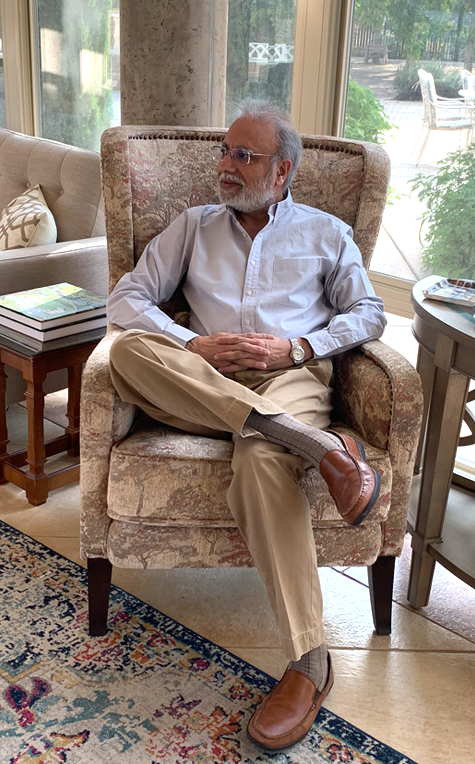
A critical care cardiologist in California, he has spent decades making decisions where consequences are immediate and irreversible. That experience shapes his work as a writer, where questions of responsibility, memory, and ethical action are not theoretical, but lived.
He approaches history and culture with the same discipline he brings to medicine: with empathy, but without avoidance. In clinical practice, compassion does not preclude diagnosis; if anything, it demands it. The physician cannot look away from difficult truths, because lives depend on clarity. He brings this same sensibility to his writing. His work is not driven by the need for comfort or affirmation, but by a willingness to examine what is unresolved, even when the conclusions are unsettling.
Across his clinical practice, teaching, and writing, Dr. Brar returns to a central concern: what it means to act when the stakes are real and the choices are imperfect. His engagement with Sikh philosophy and history reflects this same orientation, marked by deep respect for the Gurus, alongside a historian’s commitment to context, interpretation, and critical inquiry.
His relationship to the civilization that shaped him is grounded in both gratitude and responsibility. To inherit a legacy, in his view, is not only to revere it, but to ask why it falters, where it fractures, and what it requires to endure.
His writing is defined by clarity, restraint, and depth, grounded in lived experience and historical context. Whether examining cardiovascular disease, cultural history, or questions of justice and conflict, his work asks a consistent question: how do beliefs translate into action when outcomes carry consequence?